Impact physics · evidence summary
Inside the first 50 milliseconds of a lunar impact.
Starting from a new solver requires environment knowledge, problem setup, numerical debugging, diagnostics and communication.
The research prompt
Original research prompt
use castro to calculate asteriod collision impact with the moon
The first 50 milliseconds of impact.
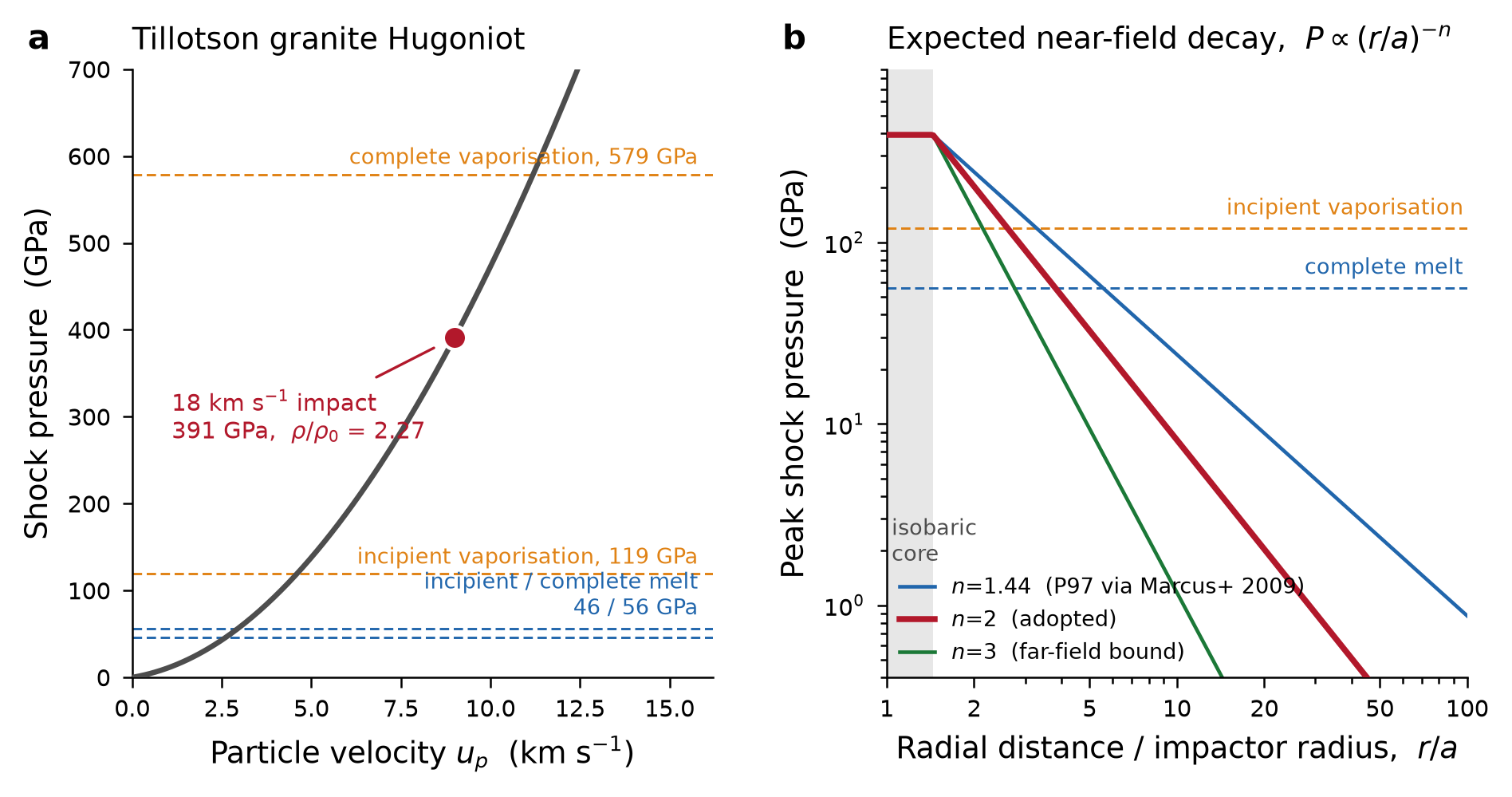
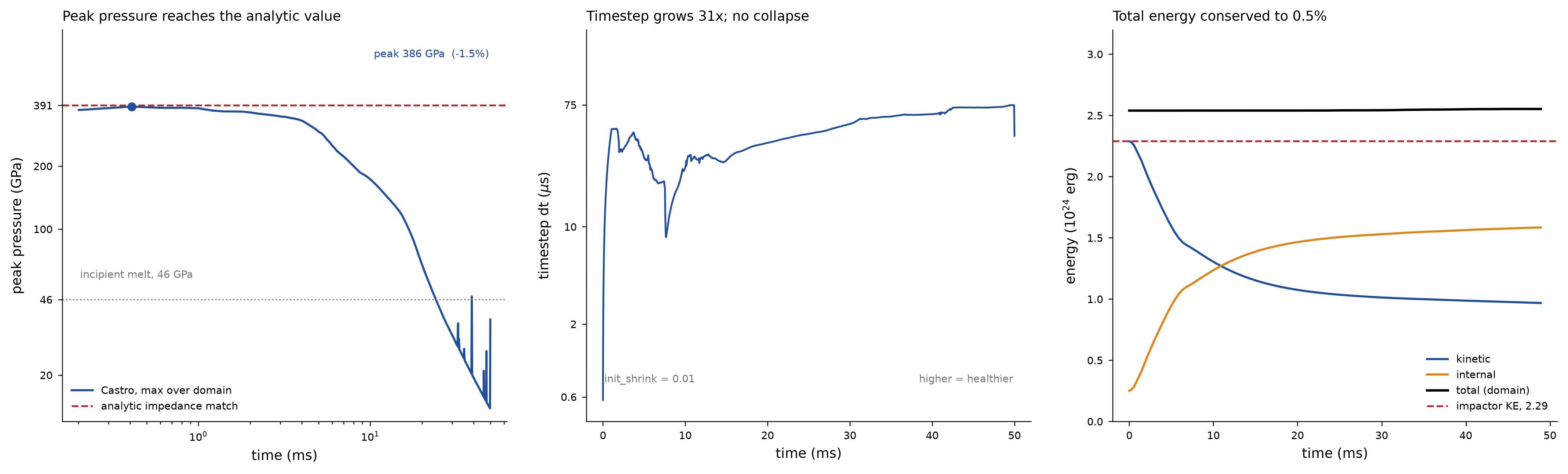
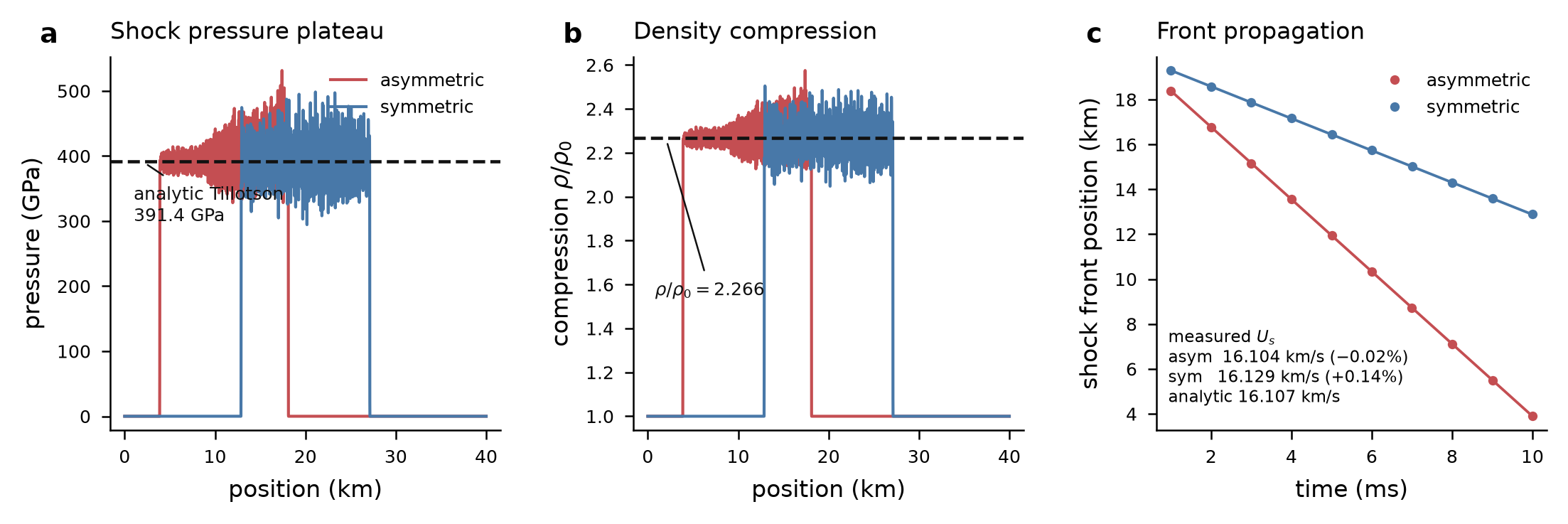
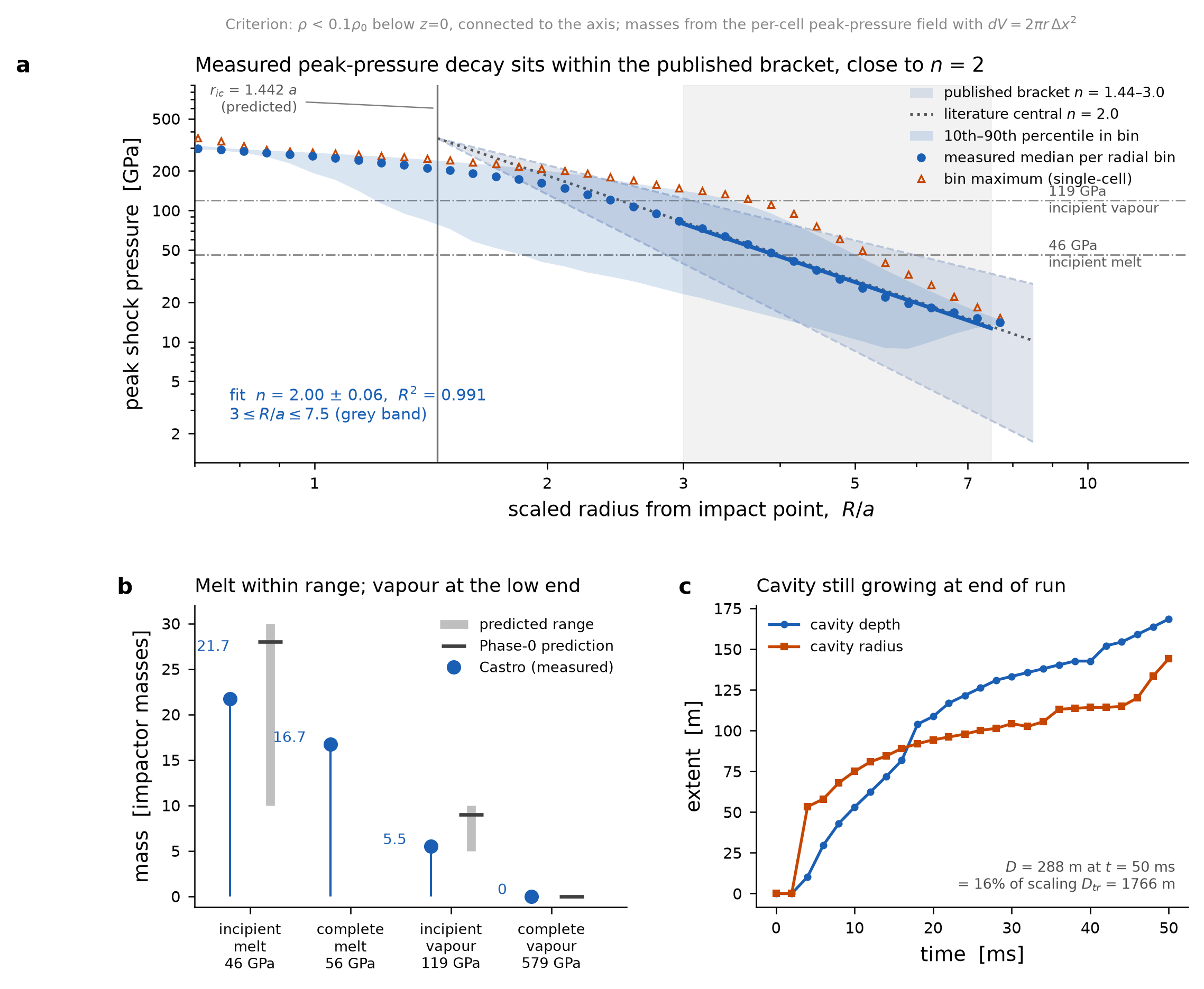
The lunar-impact chapter recorded a peak pressure of about 385.7 GPa, compared with a 391.4 GPa analytic reference. Earlier chapters explored fluid instability and a stellar-layer toy.
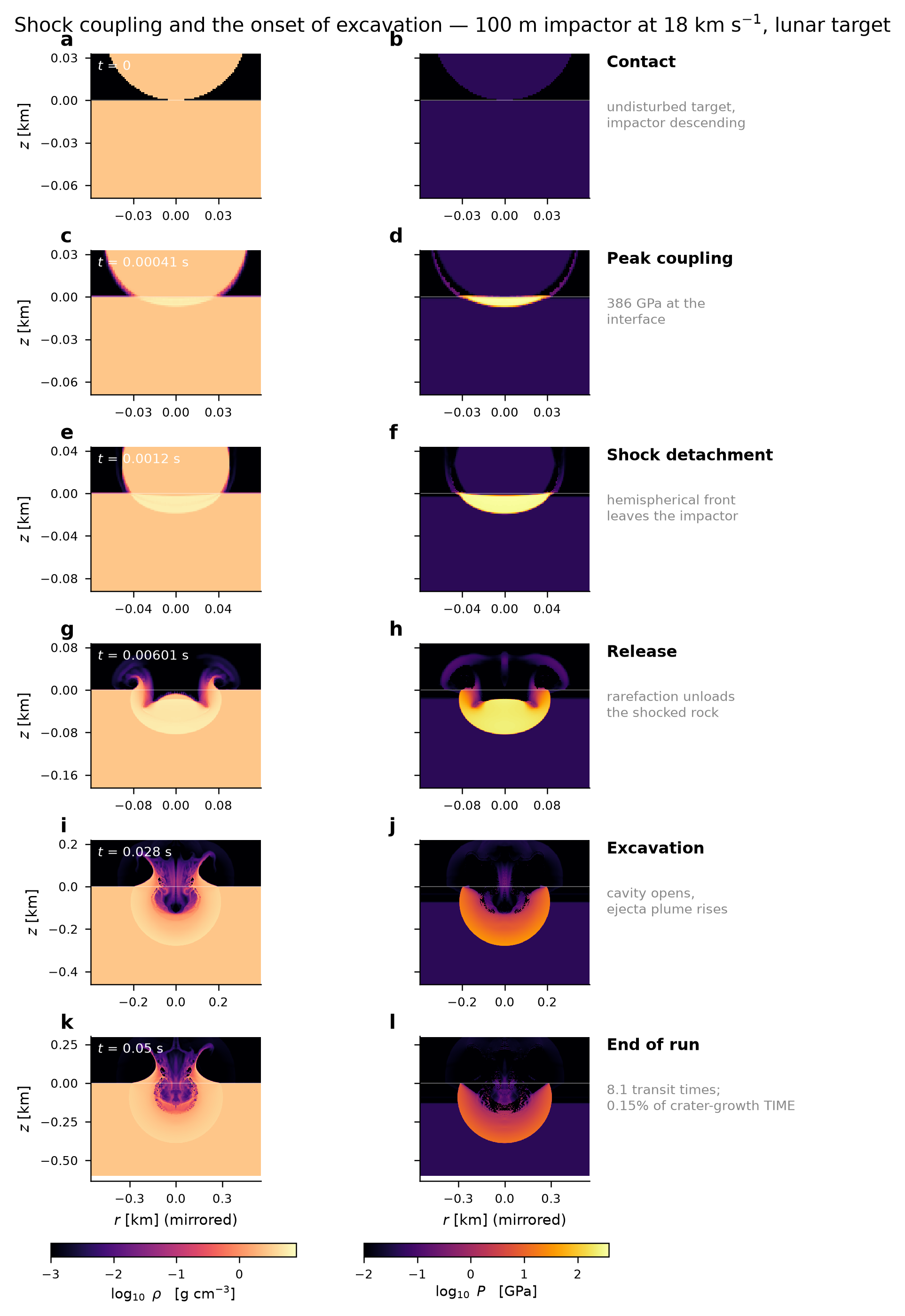
The impact simulation ends at 0.05 seconds. The final-crater estimate comes from a separate scaling law; the stellar example is an idealized toy.
The recorded investigation
Chapter 1 · create a specialist and test an instability
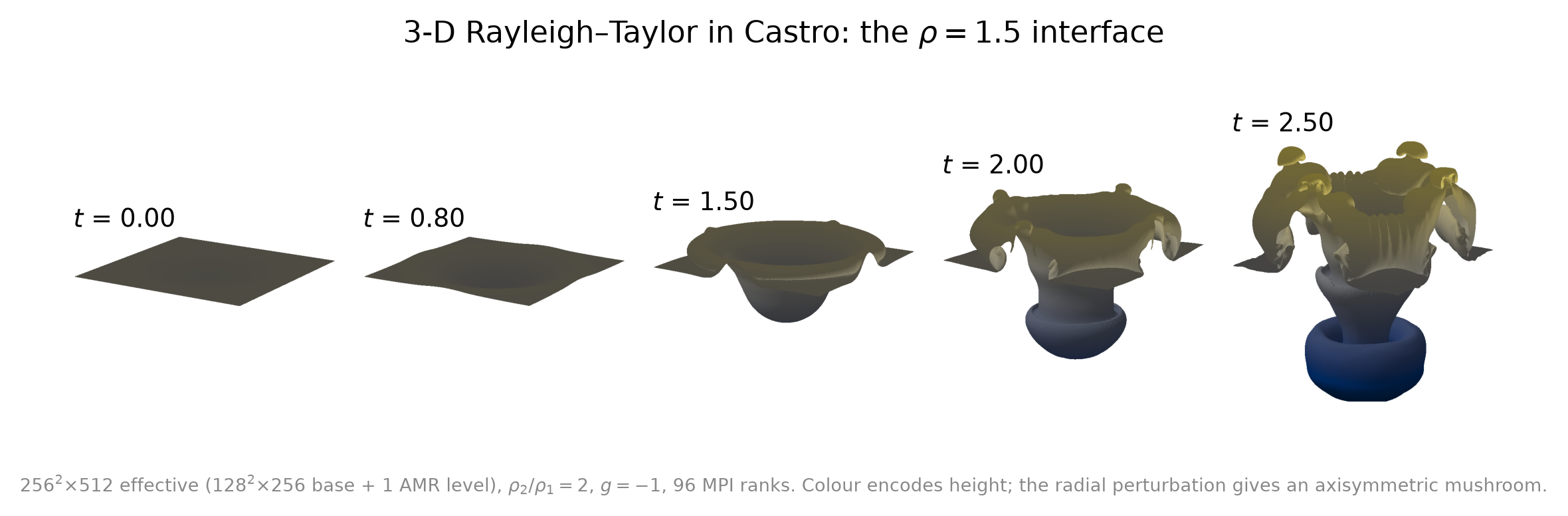
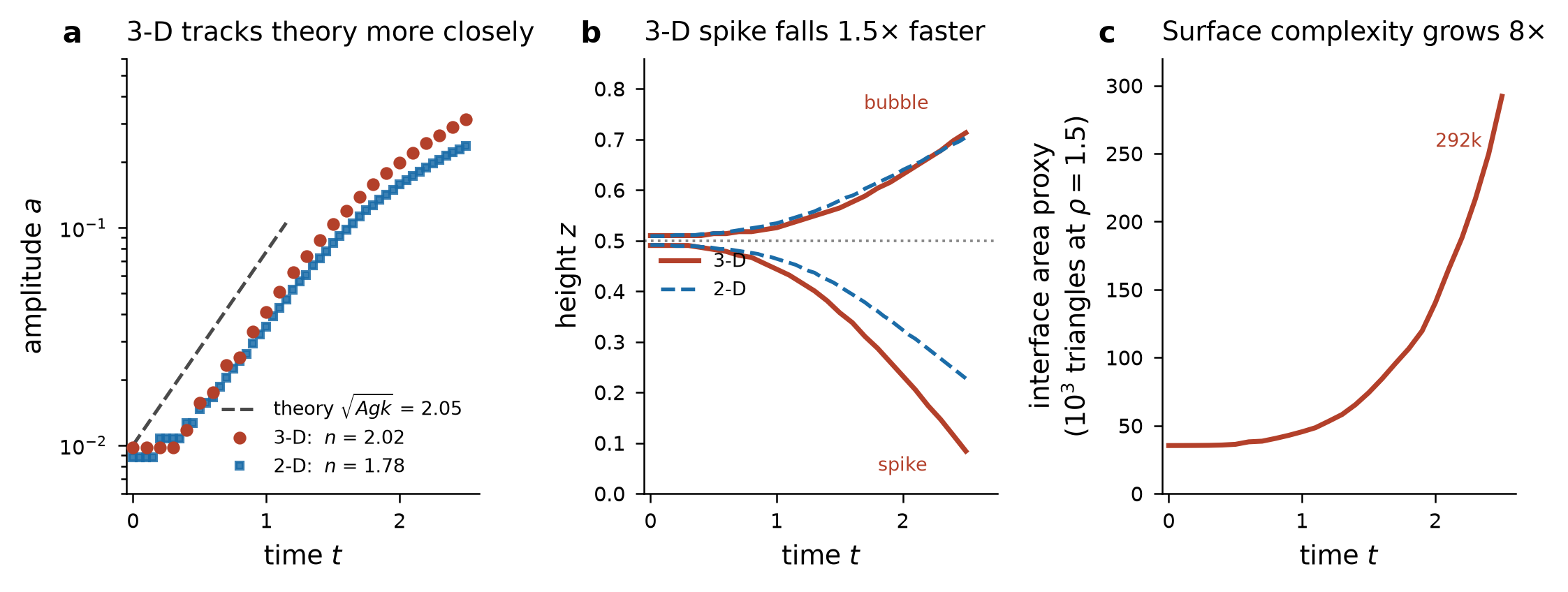
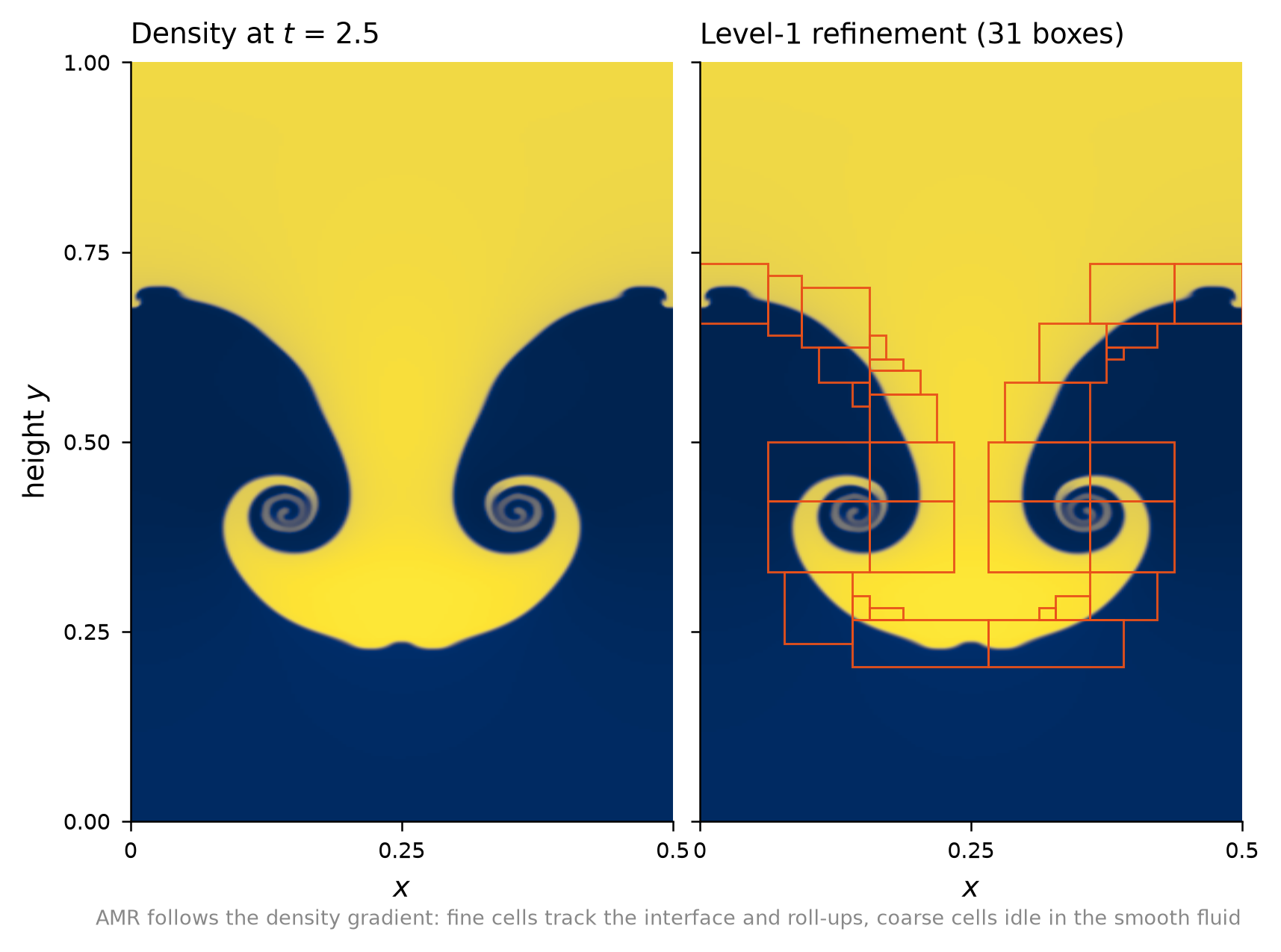
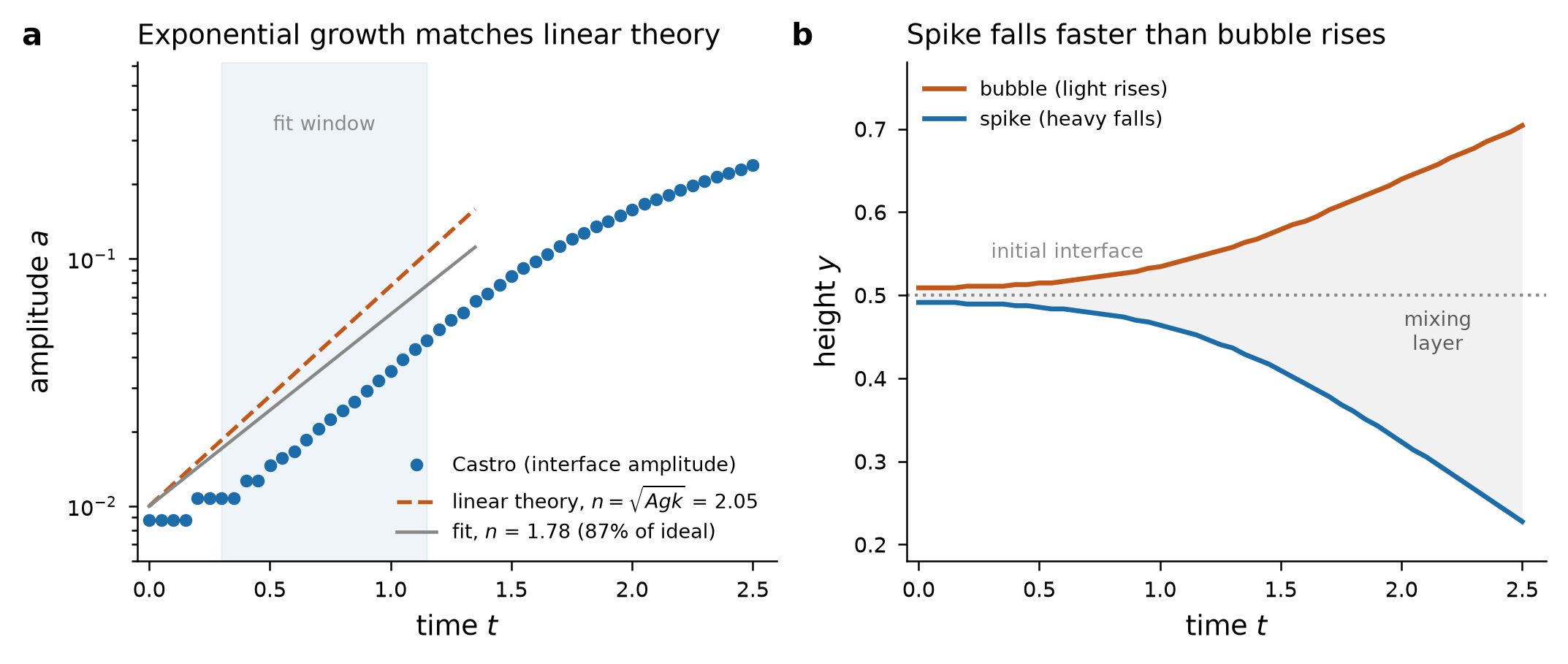
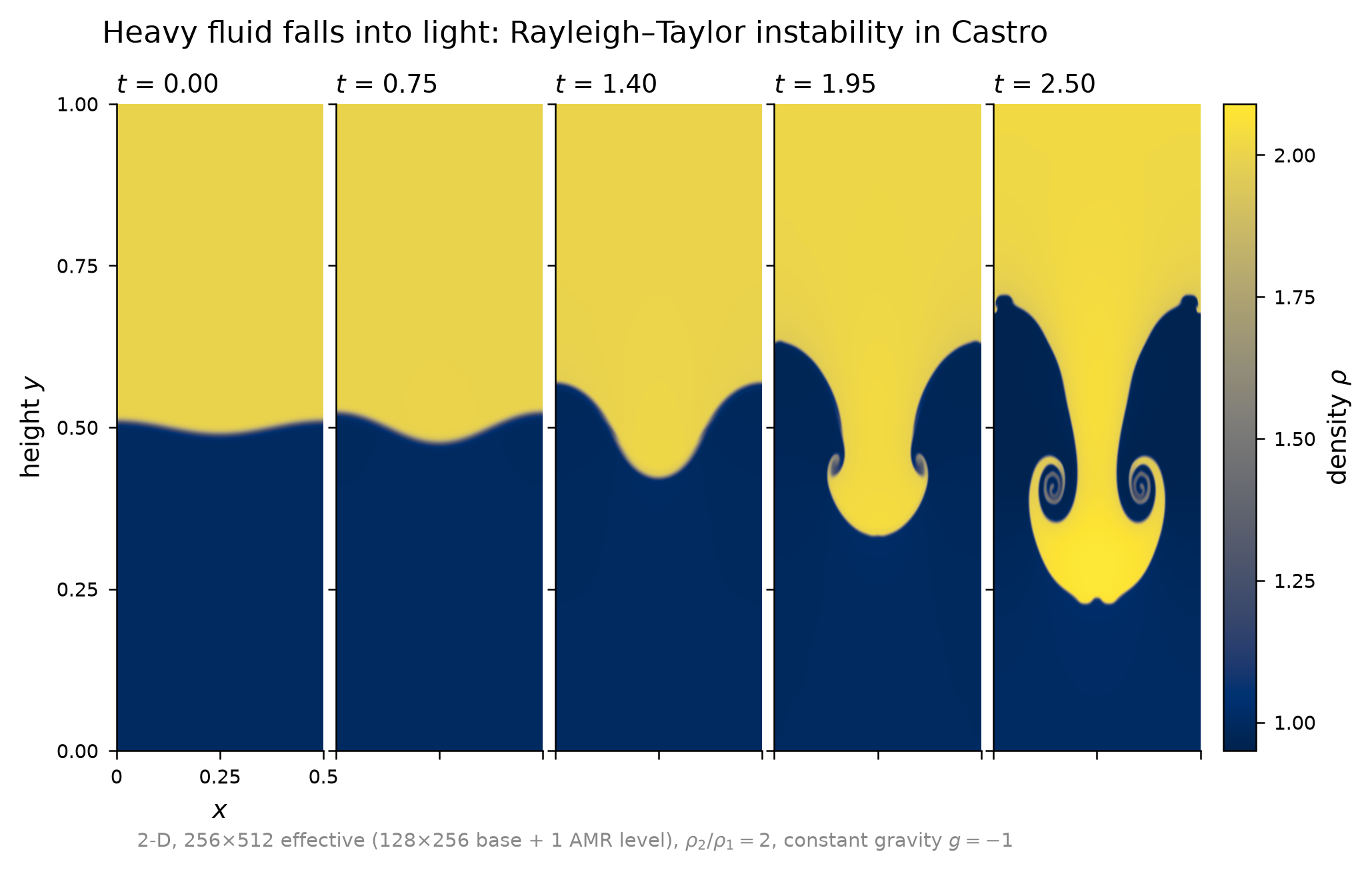
The session starts with a Castro specialist, then demonstrates Rayleigh–Taylor instability in 2D and 3D: heavy fluid falling through lighter fluid.
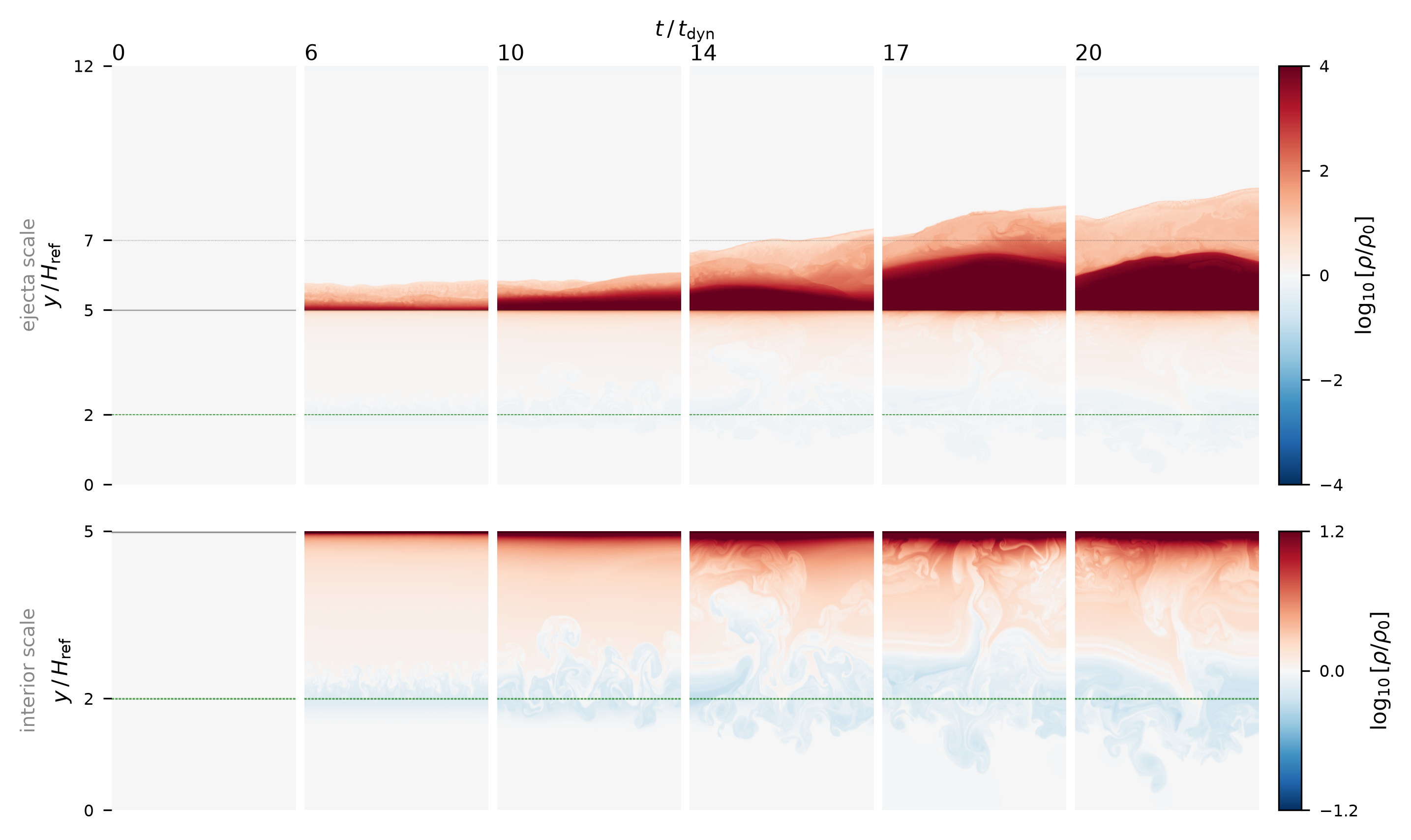
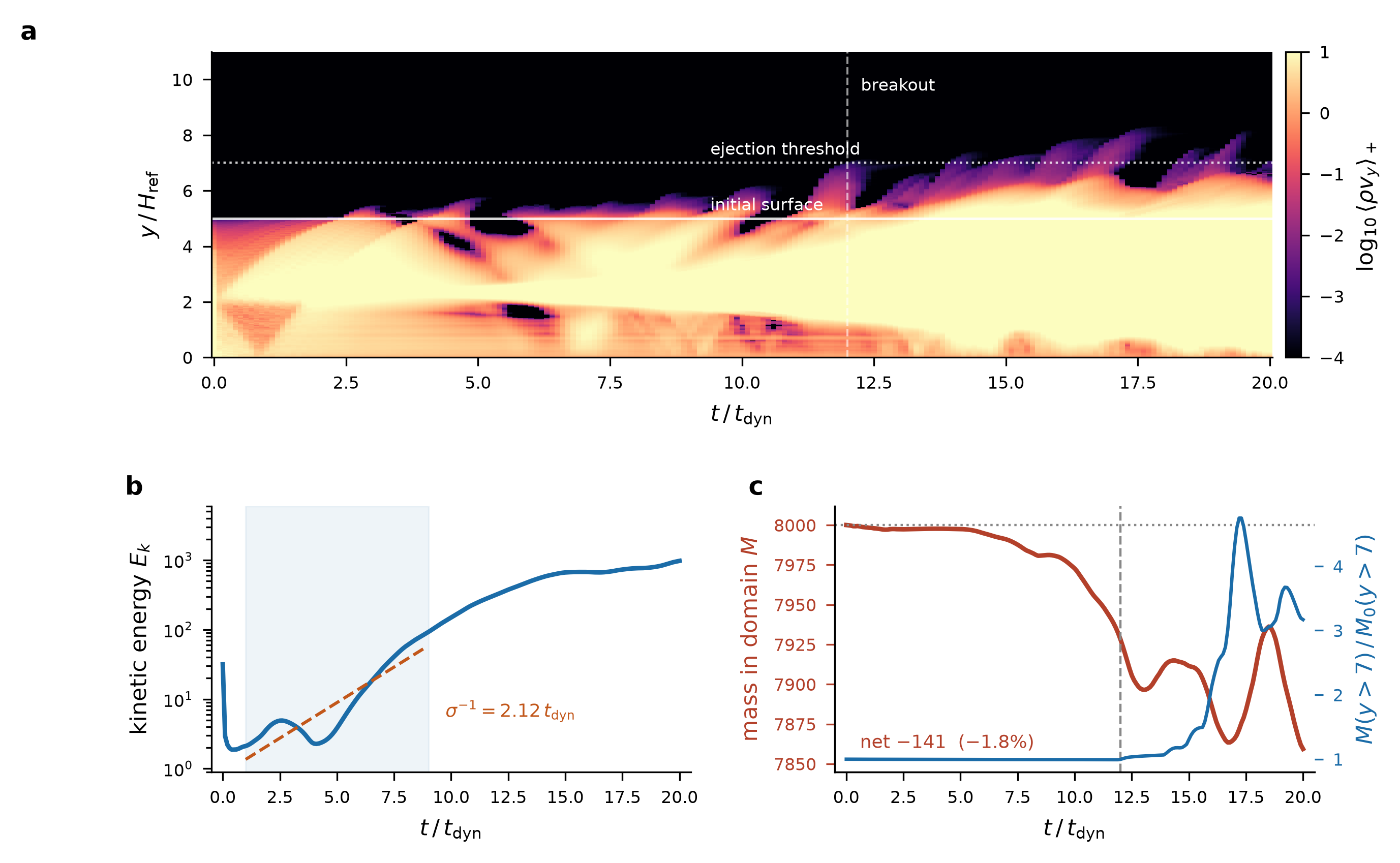
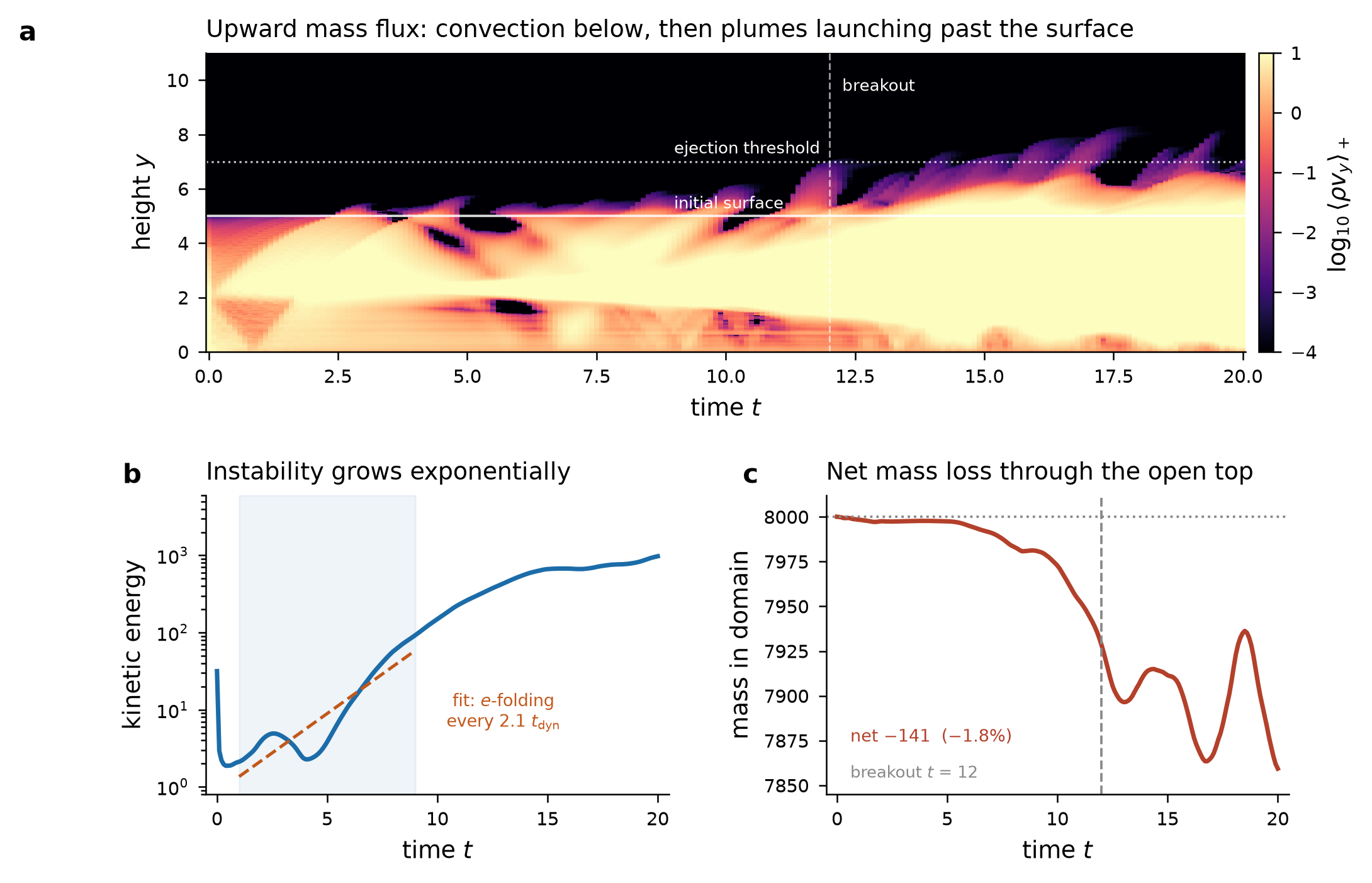
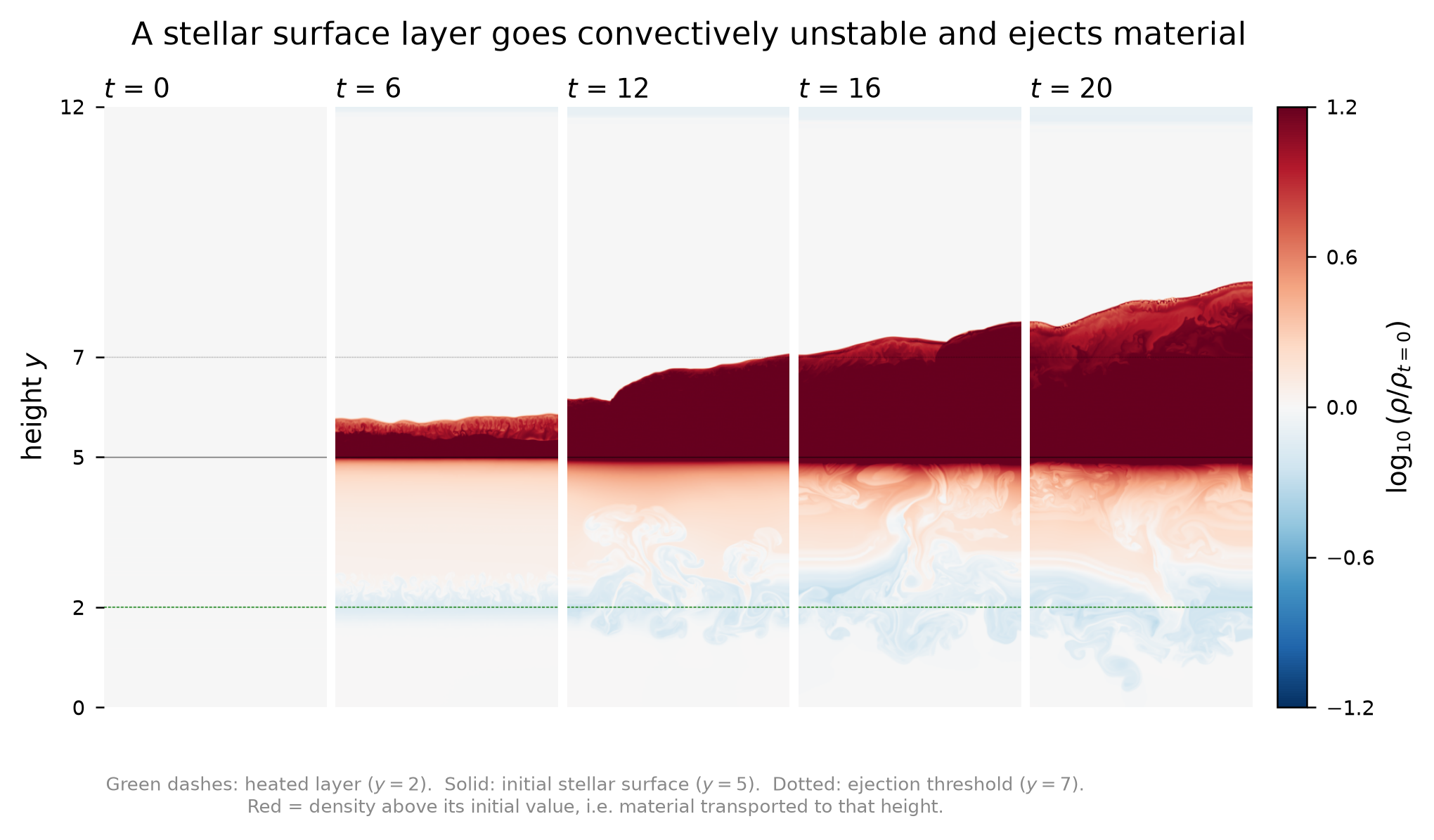
Chapter 2 · explore a stellar-layer toy
An imposed heat pulse drives motion in a two-dimensional plane-parallel atmosphere. The output measures material leaving the computational top boundary. It is not a magnetized solar-ejection model.
Chapter 3 · simulate a lunar impact’s early shock
A 100 m rock strikes at 18 km/s in a 2D axisymmetric setup with a custom equation of state. The calculation covers only the first 0.05 seconds.
Compare and qualify the output
The recorded impact peak pressure is about 385.7 GPa versus a 391.4 GPa analytic reference. A 2.21 km final crater estimate comes from a scaling law, not the short simulation.
Where the conclusion stops
- These are three chapters in one session, not three independent customer successes.
- The stellar toy omits magnetic fields and does not model a solar coronal mass ejection.
- The impact calculation ends before final crater formation; the 2.21 km estimate is a separate scaling-law result.
- Equation-of-state, diagnostic, literature and audit issues were revised during the record. The supplied reports are not an independent validation or a fully reconciled reproducibility package.
- Melt thresholds and mass estimates involve additional assumptions; the reader does not promote them as verified physical predictions.
The next useful test
Reconcile the final input and diagnostic package, then validate the intended regime against an independent benchmark before extending the model.
Selected scientific files
These files support inspection of the study. They are not a complete package of run inputs, dependencies or raw outputs. Scientific scripts are provided for reading; this website does not execute them.
- analyse_sunconv.py · public copy
- analyse_sunconv2.py · public copy
- analyse_sunconv3.py · public copy
- analyse_sunconv4.py · public copy
- extrema_clean.csv
- fig1_snapshots.png
- fig2_metrics.png
- gate_results.json
- hugoniot_decay.png
- impact_theory_baseline.json
- li2d_verification.png
- lunar_impact.mp4
- lunar_impact_1d_verification.json
- lunar_impact_1d_verification.png
- lunar_impact_cavity_timeseries.csv
- lunar_impact_decay_melt.png
- lunar_impact_metrics.csv
- lunar_impact_metrics.json
- lunar_impact_peak_pressure_profile.csv
- lunar_impact_snapshots.png
- pressure_decay_correction.json
- render_iso.py · public copy
- render_rt3d.py · public copy
- rt3d_instability.mp4
- rt3d_metrics.csv
- rt3d_snapshots.png
- rt3d_vs_2d.png
- rt_amr_grids.png
- rt_growth.png
- rt_instability.mp4
- rt_snapshots.png
- sun_ejection.mp4
- sun_ejection.png
- sun_snapshots.png
- sun_summary.csv
- sunconv_metrics.csv
- tillotson_reference.json
- verified_numerics.json
Public copy: internal compute identifiers and local environment paths were removed or generalized. Scientific values are retained. Paths may need adapting and some original run inputs are not included.
This is an editorial evidence summary of a recorded investigation, including later requests and review. The prompt animation is a presentation of saved work, not a live simulation. Human time saved was not measured.