Gravity geophysics · evidence summary
A close gravity fit can still miss the depth.
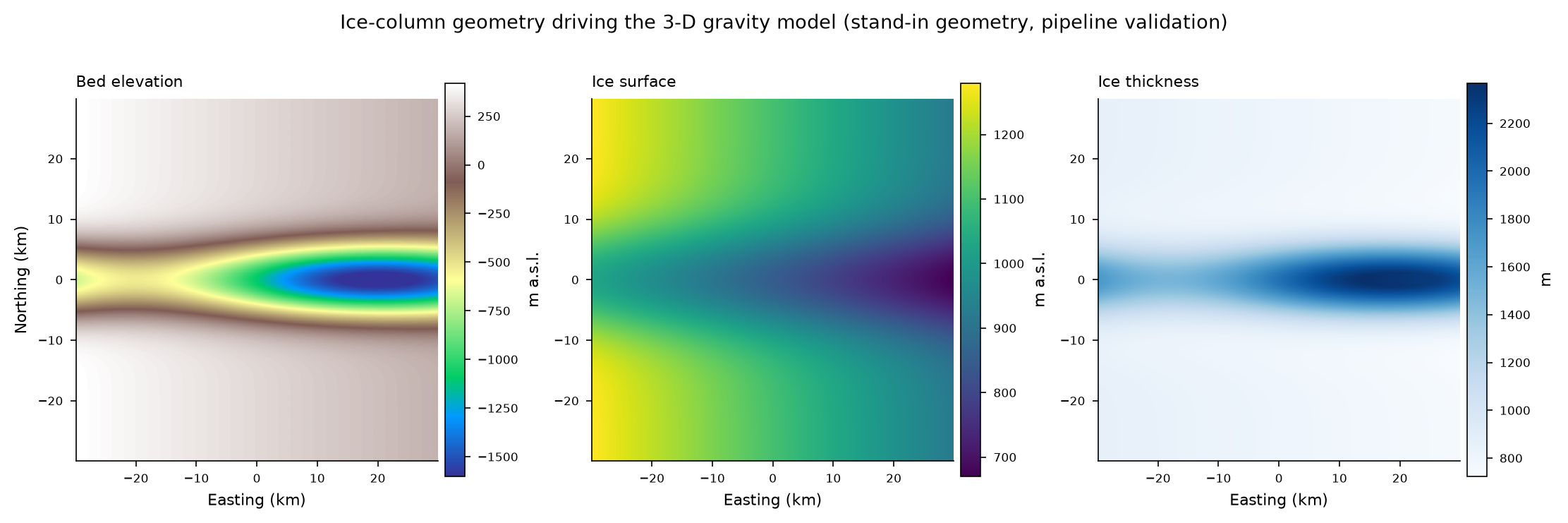
The user wanted real Earth data. Access to BedMachine was blocked, so the recorded study substituted synthetic geometry. That change determines what the result can claim.
The research prompt
Original research prompt
use SemPeg, think about some kind of data you get from your earthdata API, and apply a 3D simulation by SImPeg trying to understand and explain the data
A close data fit, with depth still unresolved.
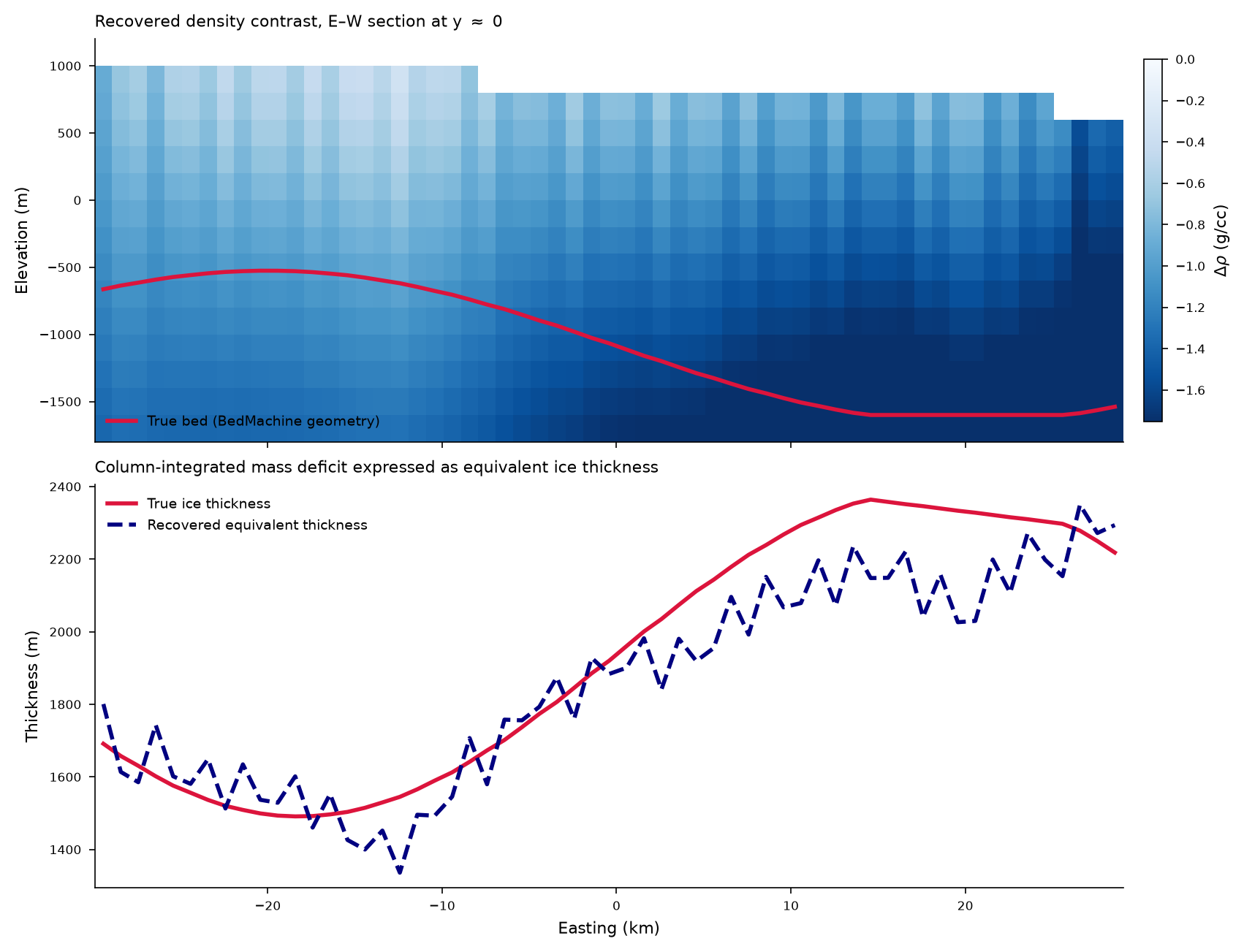
When real-data acquisition failed, the study used a synthetic gravity example. A near-target misfit and mass recovery did not establish reliable depth recovery.
Synthetic substitute after real-data acquisition failed. The original figure retains a misleading BedMachine label; depth recovery remains unresolved.
The recorded investigation
Disclose the data substitution
The study uses a synthetic stand-in, not the requested real BedMachine dataset. The source report records the access problem.
Build and invert a gravity experiment
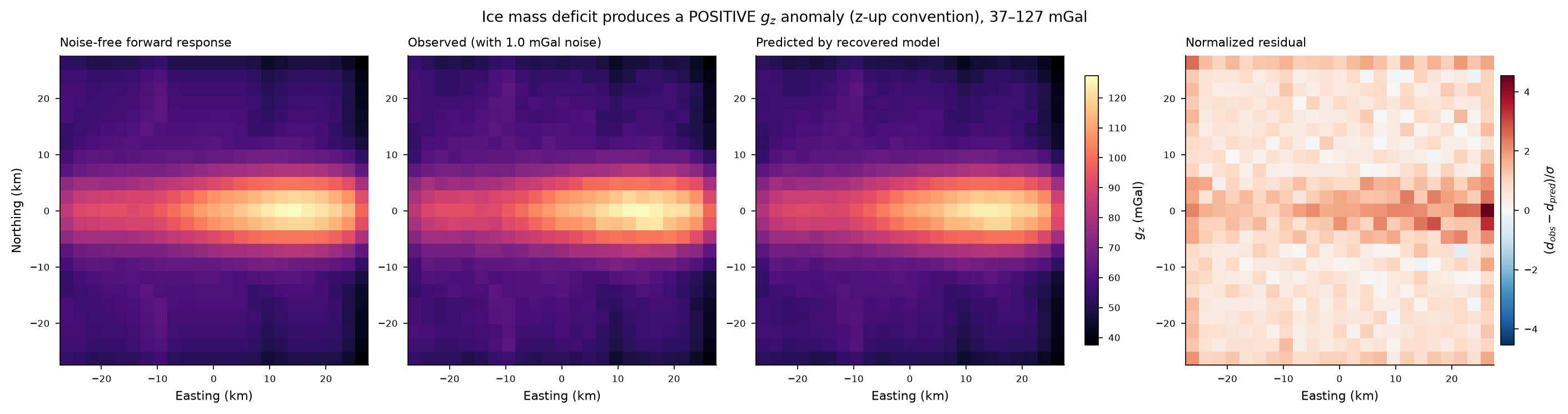
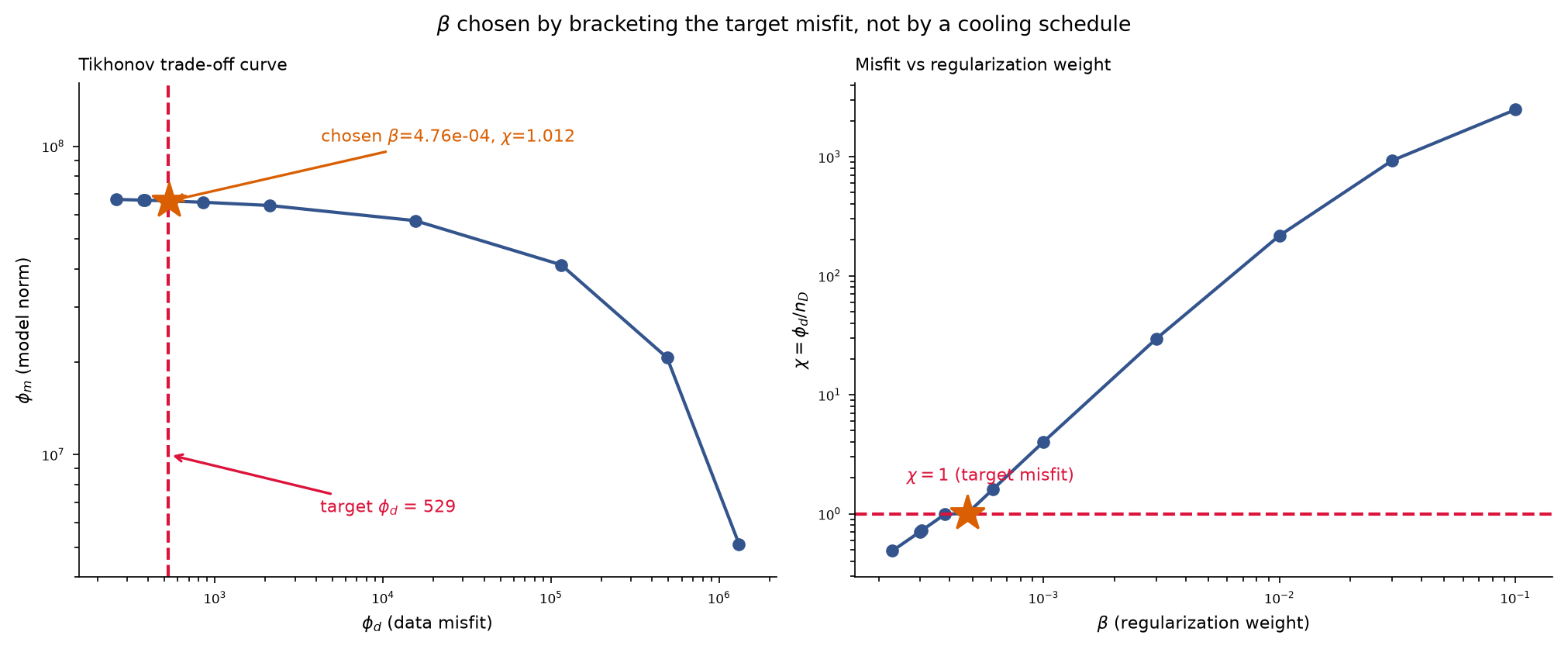
The model uses 49,376 active cells and 529 synthetic stations. Review corrected a thousand-fold unit issue and rejected an optimizer exit code as sufficient convergence evidence.
Check the answer against known synthetic truth
The recovered mass is about 5.02% above the constructed truth, and the along-axis position is close, but the bed-depth geometry remains unresolved.
Deliver both fit and failure
The report, scorecard, figures and movie show why a near-target data misfit is insufficient for a trustworthy depth estimate.
Where the conclusion stops
- The requested real-data acquisition did not succeed; the demonstrated study is synthetic.
- Matching the data does not establish bed-depth recovery. Residual bias also remains in the scorecard.
- Mass and position errors concern this chosen synthetic truth and noise model, not field performance.
- The original figure retains a misleading BedMachine label, explicitly qualified here.
The next useful test
Obtain the intended dataset, then add independent depth information and repeat the inversion with an appropriate uncertainty analysis.
Selected scientific files
These files support inspection of the study. They are not a complete package of run inputs, dependencies or raw outputs. Scientific scripts are provided for reading; this website does not execute them.
- beta_sweep_coarse.json
- beta_sweep_fine.json
- fig1_geometry.png
- fig2_anomaly.png
- fig3_sections.png
- fig4_convergence.png
- gravity_inversion_explainer.mp4
- gravity_scene.py · public copy
- resolved_spec.json · public copy
- scorecard.json
Public copy: internal compute identifiers and local environment paths were removed or generalized. Scientific values are retained. Paths may need adapting and some original run inputs are not included.
This is an editorial evidence summary of a recorded investigation, including later requests and review. The prompt animation is a presentation of saved work, not a live simulation. Human time saved was not measured.