Molecular chemistry · evidence summary
One more water molecule changes the answer.
How does hydrogen chloride land on, react with, and leave a silica surface? The answer changes with the surface's hydroxyl sites and its water coverage. An R&D team needs to know which assumptions dominate the result and which measurement would reduce uncertainty, rather than receiving a single rate for an unspecified surface.
The research prompt
Selected research prompt excerpt
Develop a simple, validated computational workflow for studying HCl adsorption on generic amorphous silica: first construct several realistic hydroxylated silica surface models with different silanol arrangements and water coverages;
54.61 → 17.73 kJ/mol
Adding a second water molecule opened a proton-relay pathway in the small-cluster calculation. The comparison changed the working reaction hypothesis.
Small-cluster electronic energies, not measured reaction rates or a periodic-surface free-energy barrier.
The recorded investigation
Make the workflow executable
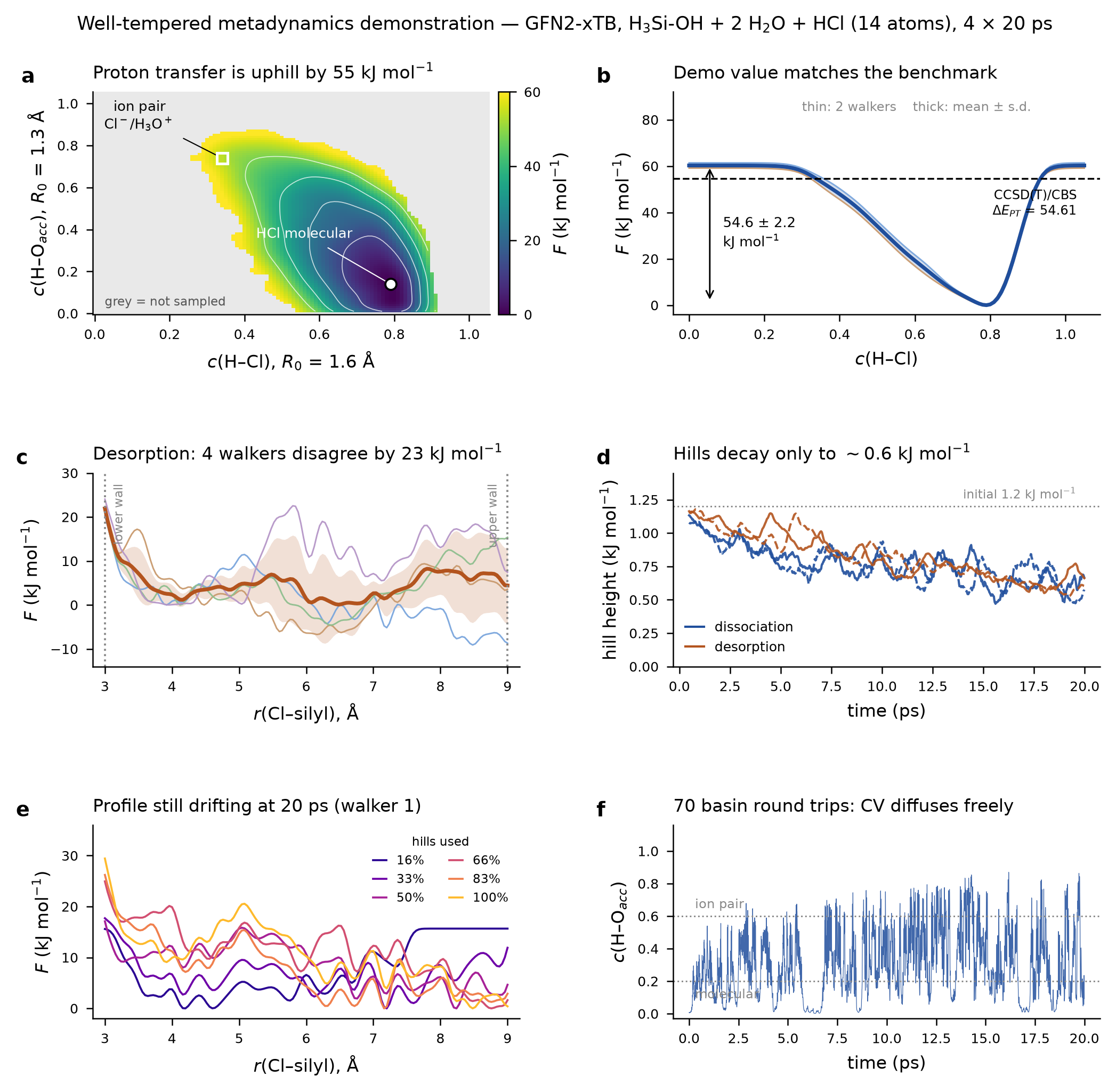
Laplace built a connected workflow with surface models, quantum benchmarks, a comparison of seven density-functional methods, simulation inputs, enhanced sampling, and a kinetics module. On initially limited hardware, it ran what was tractable and specified larger calculations separately. The 120-ps dynamics demonstration checked the sampling machinery on a small cluster; it did not simulate an extended silica surface at production fidelity.
Extend the calculation where the assumption matters
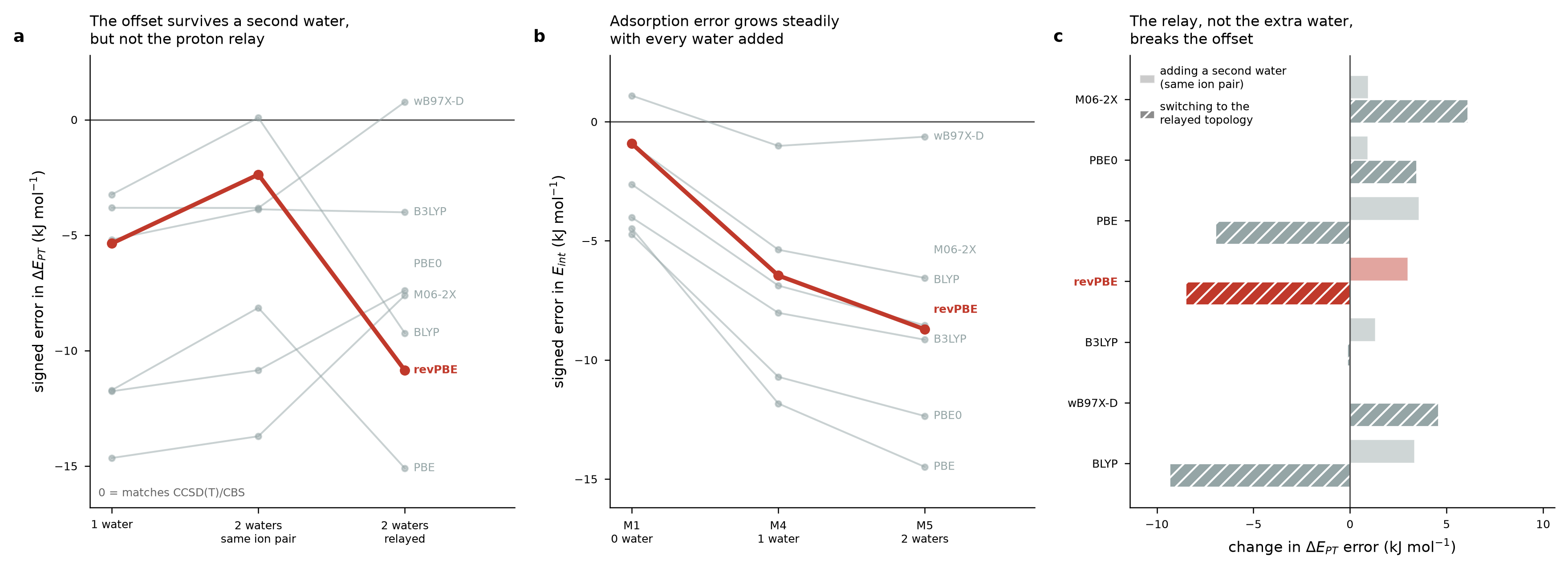
After cluster access became available, Laplace added missing molecular models and tested numerical settings. The important scientific result came from a second water molecule: the computed proton-transfer cost fell from 54.61 to 17.73 kJ/mol. A controlled comparison separated ordinary solvation from a proton-relay pathway. Water was participating in the mechanism, rather than merely changing the environment.
Let better evidence overturn the earlier story
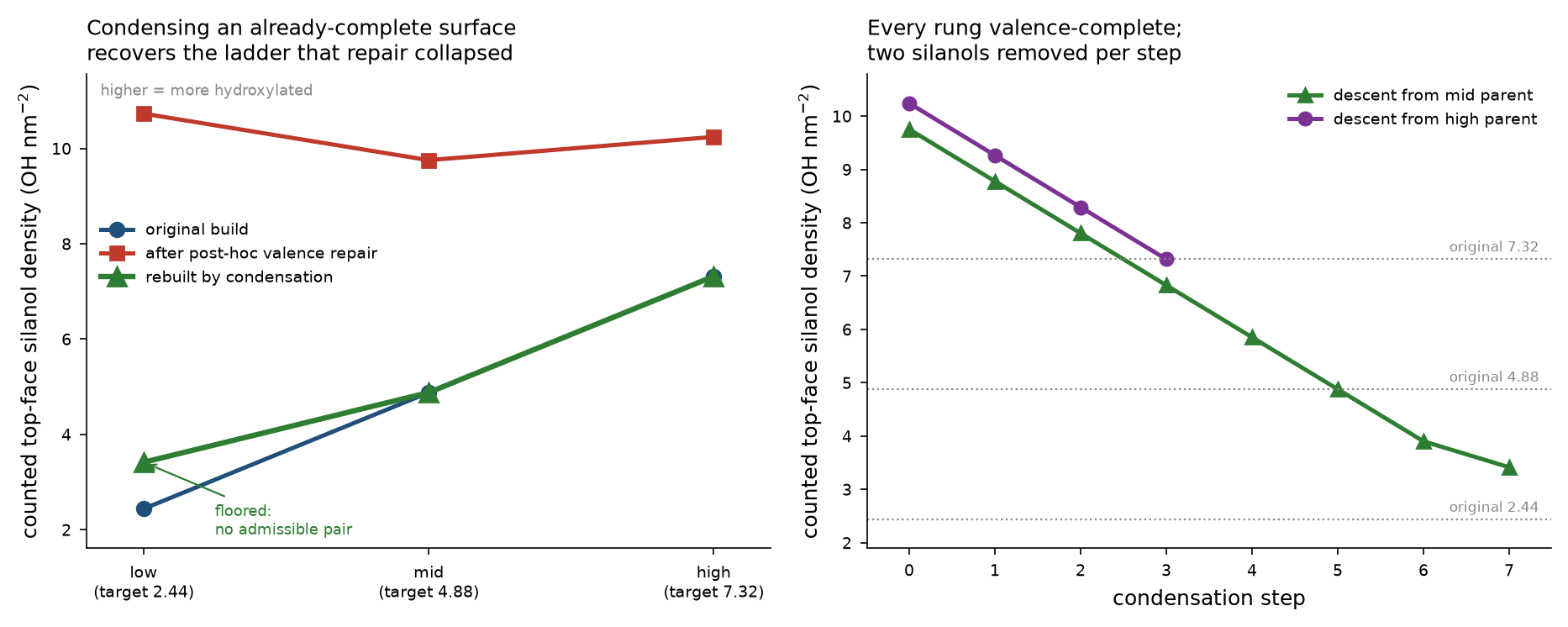
The extension exposed limits in the first-stage picture. A functional-error correction changed on the relay geometry. The proposed plane-wave cutoff failed the project's force criterion. Repairing defective surface structures collapsed the intended hydroxyl-density ladder, prompting a different construction method. The output therefore includes revised models and an explicit account of which earlier claims no longer survive.
Where the conclusion stops
- The headline 54.61→17.73 kJ/mol compares cluster electronic-energy costs. It should not be described as a measured acceleration or a converged periodic free-energy barrier.
- The 52 periodic calculations were numerical convergence probes on unrelaxed geometries. No periodic adsorption energy or full periodic ab-initio dynamics result was produced.
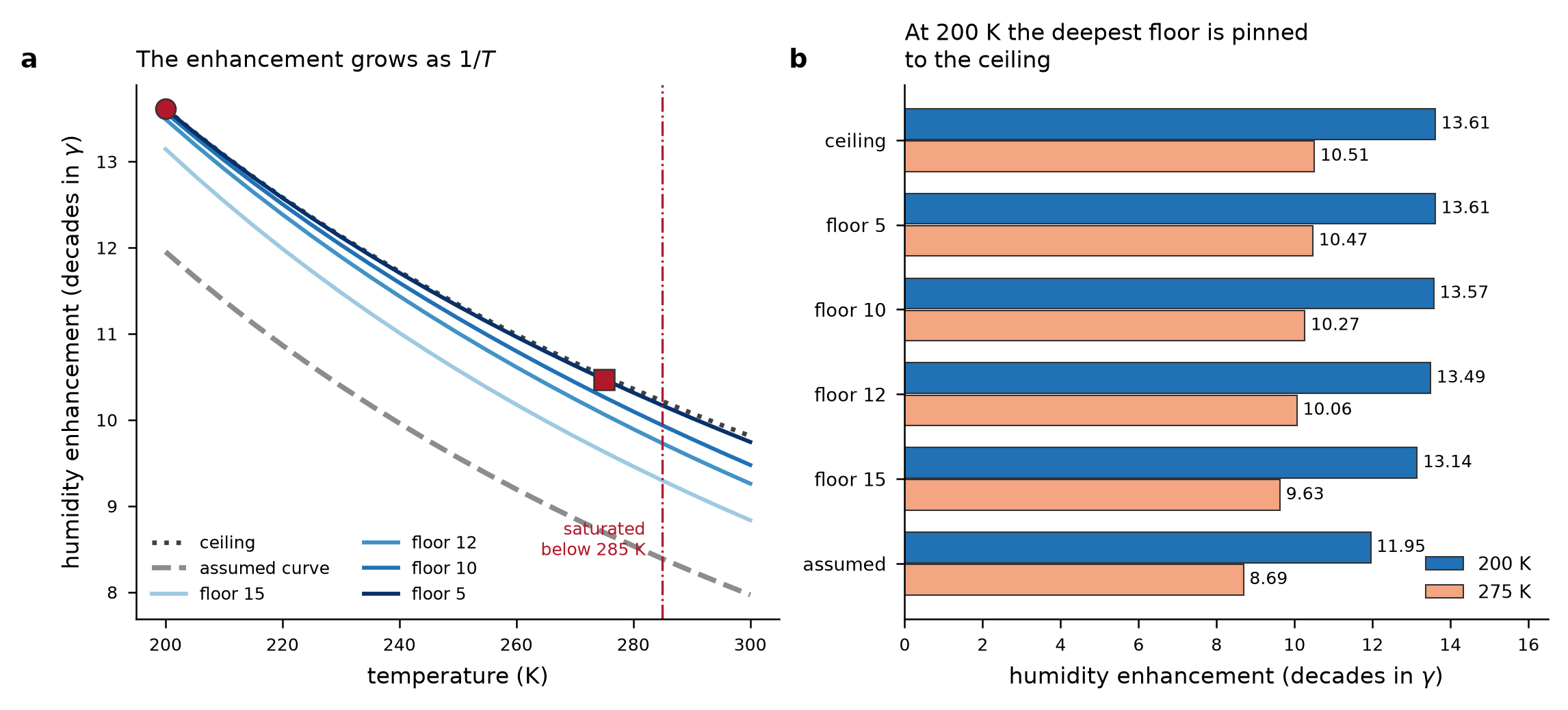
- The updated hydration curve and topology-dependent error were not propagated through the full original uncertainty calculation. Experimental comparison remains prospective.
- The HNO3 extension delivered a generalised pipeline and structures, but no composite HNO3 energetics. Some first-stage limitation prose remains stale; the later methods, second-stage results and numeric files determine this case study's scope.
The next useful test
Compute relaxed periodic adsorption energies on the rebuilt surfaces, then compare uptake against independently measured water coverage and site populations. The session narrows the next research step; it does not close the full material-validation problem.
Selected scientific files
These files support inspection of the study. They are not a complete package of run inputs, dependencies or raw outputs. Scientific scripts are provided for reading; this website does not execute them.
- cost_estimates.csv
- fes_demo.png
- fig_reanchor_T.png
- functional_error_1w_vs_2w.png
- ladder_rebuilt.png
- m2m5_offset_drift_decomposed.csv
- m2m5_summary.json
- reanchored_vs_T.csv
This is an editorial evidence summary of a recorded investigation, including later requests and review. The prompt animation is a presentation of saved work, not a live simulation. Human time saved was not measured.